MiCA License: Redefining the crypto future
A new regulatory standard for crypto-assets
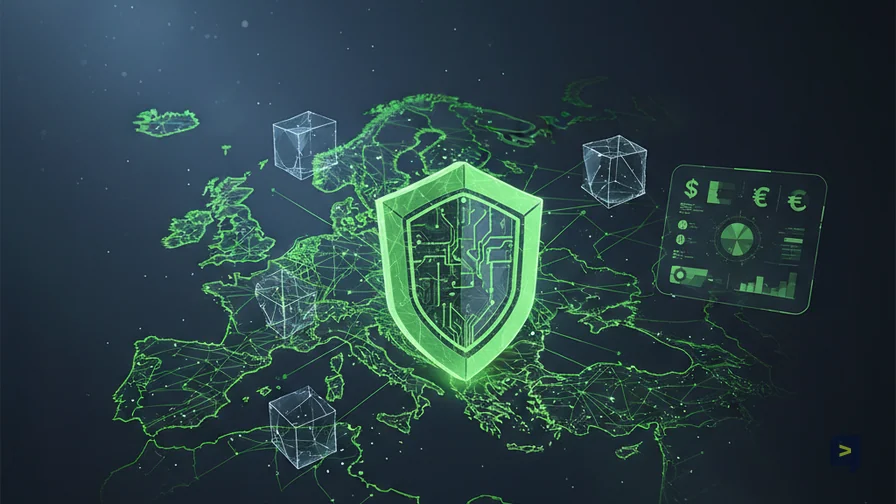
Europe has put an end to the “wild west” of cryptocurrencies. The MiCA (Markets in Crypto-Assets) Regulation, in force since December 2024, creates the first harmonized legal framework for the crypto sector in the European Union.
This regulation not only seeks to protect investors and strengthen the stability of the financial system, but also to establish a level playing field for technology companies, banks, and emerging platforms that want to operate with digital assets in a clear legal environment.
What exactly is the MiCA license and why does it matter?
The MiCA license is a permit granted to companies that provide services with crypto-assets—from exchanges to custodians or stablecoin issuers—so that they can operate throughout the EU with a single authorization. This “European passport” eliminates the need to register subsidiaries in each country and standardizes the requirements for transparency, solvency, cybersecurity, auditing, and regulatory compliance (AML/KYC).
In practice, it enables a new generation of regulated services, such as institutional wallets, crypto investment products, legally backed stablecoins, or DeFi solutions in controlled environments.
Which companies already have the license in Spain and Europe?
In Spain, the CNMV has granted the MiCA license to:
- Bit2Me, the first national exchange to achieve approval after an exhaustive process.
- BBVA, which is expanding its activity from its entity in Switzerland.
- Cecabank, which operates as a regulated custodian for financial institutions.
- Openbank, the digital arm of the Santander Group, which already offers crypto products linked to ETPs and is preparing its full service under MiCA.
At the European level, the list already includes more than 50 companies, including:
- Coinbase and Kraken (Ireland)
- Bitstamp (Luxembourg)
- OKX (Malta)
- Vivid (Netherlands)
- CoinShares (France), a pioneer in combining MiCA with MiFID and AIFM
These licenses not only endorse the reliability of the operators, but also consolidate their access to a fully expanding European digital economy.
How is the MiCA license obtained?
The process includes:
- Registration as a CASP with the national authority (in Spain, the CNMV).
- Presentation of a technical, economic, and legal white paper.
- Review of the business model, AML/KYC policies, governance structure, and cybersecurity.
- Demonstration of reserves and compliance with financial requirements (minimum capital of up to €150,000).
- Evaluation of the suitability of directors and control bodies.
Although the framework is common, the agility of the process depends on the country. Some jurisdictions (such as Germany or Malta) are attracting more operators due to their speed and favorable approach.
What changes for companies with this license?
- Scalability: they can offer crypto services throughout the EU without additional procedures.
- Credibility: they gain trust with institutional clients and regulated consumers.
- Access to traditional banking: synergies with financial institutions are amplified.
- Legal innovation: they can develop crypto financial products in compliance with European regulations.
Bit2Me, for example, is already collaborating with Cecabank on a platform so that other banks can offer crypto services without developing their own technology.
The shadows of the new framework: controversies and challenges
Not everything is applause. Several voices and technology communities in the sector warn of frictions and limitations:
- Global stablecoins without effective control: MiCA regulates those issued in the EU, but does not prevent foreign stablecoins (like USDT) from circulating freely within the European space. This creates a risk of regulatory arbitrage and lack of traceability, especially in times of crisis.
- Disparity between countries: while countries like Germany and the Netherlands have approved dozens of licenses, in Spain the process has been slower. This has generated criticism about a possible competitive disadvantage for local startups compared to already regulated international players.
- Restrictions on DeFi products: MiCA expressly prohibits offering interest on crypto-assets, limiting the appearance of staking or lending products that are popular today outside of Europe.
- Criticism of laxity in some countries: ESMA has pointed out deficiencies in the control of licenses granted by Malta, which could weaken the effectiveness of the European passport if they are granted without sufficient rigor.
These issues point to the need for a future “MiCA 2” that reinforces controls, closes legal loopholes, and adapts to the constant innovation of the ecosystem.
The MiCA Regulation marks a before and after. Europe is taking the global lead in the regulation of digital assets, while other markets remain in gray areas.
For companies, this license is not only a legal framework, but a lever for growth, reputation, and collaboration in the new digital financial environment. The key will be to take advantage of the moment without losing agility: those who integrate compliance and strategic vision will be the ones to lead the next wave.
Is your company ready to lead this wave?
At My Tech Plan, we help organizations stay at the forefront of technological innovation through strategic content, customized events and training, and building active technology communities. We support your team with fresh ideas, multi-platform formats, and events that connect your community with the latest industry trends.
And if you want to discover in depth how these systems are working in practice, we look forward to seeing you at the Gen AI Summit, where we will be sharing real experiences, implementation frameworks, and key technologies.